

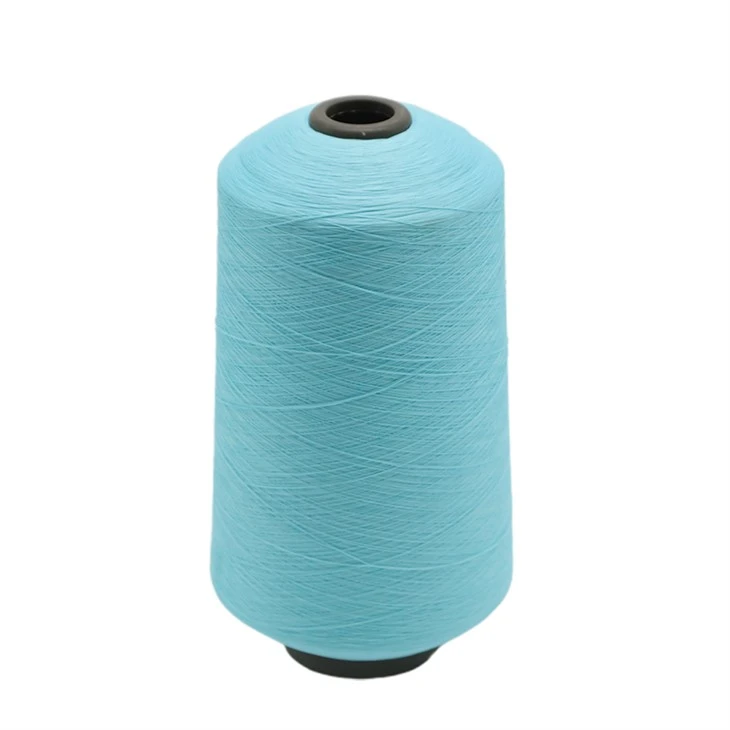
Product Features & Advantages
- Continuous Filament Nylon Structure
The yarn is produced with continuous polyamide filaments, forming a smooth yarn surface that reduces friction during yarn feeding, guide contact, and repeated needle movement in knitting systems.
- Stable Loop Formation in Knitting Operation
During circular and warp knitting processes, the yarn operates under cyclic tension and continuous loop formation. Controlled filament alignment helps maintain loop consistency and reduces instability during high-speed machine operation.
- Abrasion Resistance Under Repeated Friction
The nylon filament structure withstands repeated contact with feeders, guides, and needles during textile processing. This helps reduce filament damage and maintains yarn integrity during continuous production cycles.
- Controlled Flexibility & Fabric Formation
The filament yarn bends repeatedly during knitting deformation cycles while maintaining structural continuity. This supports stable fabric density and uniform textile surface formation in knitted applications.
Customization Services
Denier & Filament Count Configuration
Different denier ranges and filament counts can be configured according to fabric density, knitting gauge, and textile processing requirements.
Yarn Structure Adjustment
Yarn structure can be adjusted through filament combination and winding configuration to control yarn flexibility, surface behavior, and feeding stability during knitting operation.
Cone Winding & Packaging Options
Cone size, winding format, and packaging configuration can be customized to match continuous knitting production systems and export shipment requirements.
FAQ
Why is nylon filament yarn suitable for high-speed knitting?
The continuous filament structure provides a smooth yarn surface and stable tensile behavior, helping reduce instability during guide contact, loop formation, and high-speed yarn feeding.
What factors affect yarn breakage during knitting?
Yarn breakage is commonly related to excessive machine tension, uneven winding density, or friction concentration at feeders and needle contact zones during continuous operation.
Can denier and filament count be customized?
Yes, denier range and filament count can be configured according to fabric density, machine gauge, and textile processing requirements.
What is the difference between nylon 6 and nylon 66 yarn?
Nylon 66 generally provides higher heat resistance and tensile stability, while nylon 6 offers greater flexibility and easier dyeing behavior in textile processing.
Hot Tags: nylon knitting yarn, China, suppliers, manufacturers, factory, wholesale, cheap


