


As a supplier of Nylon Covered Yarn, I often encounter inquiries regarding its heat resistance. Understanding the heat resistance of nylon covered yarn is crucial for various applications, especially in industries where the yarn is exposed to high temperatures during processing or use. In this blog post, I will delve into the factors that affect the heat resistance of nylon covered yarn, its performance under different temperature conditions, and its suitability for specific applications.
Factors Affecting Heat Resistance of Nylon Covered Yarn
The heat resistance of nylon covered yarn is influenced by several factors, including the type of nylon used, the construction of the yarn, and any additional treatments or coatings applied.
Type of Nylon
There are different types of nylon polymers, such as nylon 6 and nylon 6,6, each with its own unique properties, including heat resistance. Nylon 6,6 generally has a higher melting point and better heat resistance compared to nylon 6. This is because nylon 6,6 has a more symmetrical molecular structure, which results in stronger intermolecular forces and a higher melting temperature.
Yarn Construction
The construction of the nylon covered yarn, such as the ratio of the core to the covering, can also affect its heat resistance. A higher proportion of nylon in the covering can provide better heat protection for the core material. Additionally, the tightness of the covering can influence how well the yarn retains its structure and properties under heat. A tightly covered yarn may offer better insulation and protection against heat compared to a loosely covered one.
Treatments and Coatings
Some nylon covered yarns may be treated or coated with heat-resistant substances to enhance their performance. These treatments can include the application of flame retardants, heat stabilizers, or other chemical agents that can improve the yarn's ability to withstand high temperatures without melting or degrading.
Performance Under Different Temperature Conditions
The performance of nylon covered yarn under different temperature conditions can vary depending on the factors mentioned above.
Low to Moderate Temperatures
At low to moderate temperatures, nylon covered yarn generally maintains its strength, flexibility, and other mechanical properties. It can withstand normal environmental temperatures without significant degradation. For example, in most indoor applications where the temperature ranges from 20°C to 30°C, nylon covered yarn performs well and can be used for a variety of purposes, such as in the manufacturing of clothing, upholstery, and industrial fabrics.
High Temperatures
When exposed to high temperatures, the behavior of nylon covered yarn changes. As the temperature approaches the melting point of the nylon, the yarn may start to soften, lose its shape, and eventually melt. The exact temperature at which this occurs depends on the type of nylon and the specific formulation of the yarn. For nylon 6, the melting point is typically around 220°C - 230°C, while nylon 6,6 has a melting point of approximately 250°C - 260°C.
However, it's important to note that even before reaching the melting point, the mechanical properties of the yarn can be affected by high temperatures. For instance, the strength and elasticity of the yarn may decrease, and it may become more prone to breakage or deformation. Prolonged exposure to high temperatures can also cause the nylon to oxidize and degrade, which can further reduce its performance and lifespan.
Suitability for Specific Applications
The heat resistance of nylon covered yarn makes it suitable for a wide range of applications, especially those where some level of heat resistance is required.
Textile Industry
In the textile industry, nylon covered yarn is commonly used in the production of heat-resistant clothing, such as protective gear for firefighters, welders, and other workers in high-temperature environments. The yarn's ability to withstand heat helps to protect the wearer from burns and other heat-related injuries. It is also used in the manufacturing of heat-resistant upholstery and curtains for commercial and industrial settings.
Industrial Applications
In industrial applications, nylon covered yarn can be used in the production of conveyor belts, hoses, and other components that are exposed to high temperatures during operation. The heat resistance of the yarn ensures that these components can maintain their integrity and performance under harsh conditions. For example, in the automotive industry, nylon covered yarn may be used in the manufacturing of engine gaskets and other parts that are exposed to high temperatures generated by the engine.
Knitting and Weaving
For knitting and weaving applications, nylon covered yarn can be used to create fabrics with specific heat-resistant properties. For example, Single Covered Yarn For Knitting Leggings can be made with nylon covered yarn to provide some level of heat protection for the wearer. Similarly, SCY Spandex Single Covered Filament Yarn and Machine Covered Yarn can be used in the production of heat-resistant fabrics for various purposes.
Conclusion
In conclusion, the heat resistance of nylon covered yarn is a complex property that is influenced by the type of nylon, yarn construction, and any additional treatments or coatings. At low to moderate temperatures, nylon covered yarn performs well and maintains its mechanical properties. However, at high temperatures, its performance can be affected, and it may start to soften, melt, or degrade. Understanding the heat resistance of nylon covered yarn is essential for selecting the right yarn for specific applications and ensuring its optimal performance.

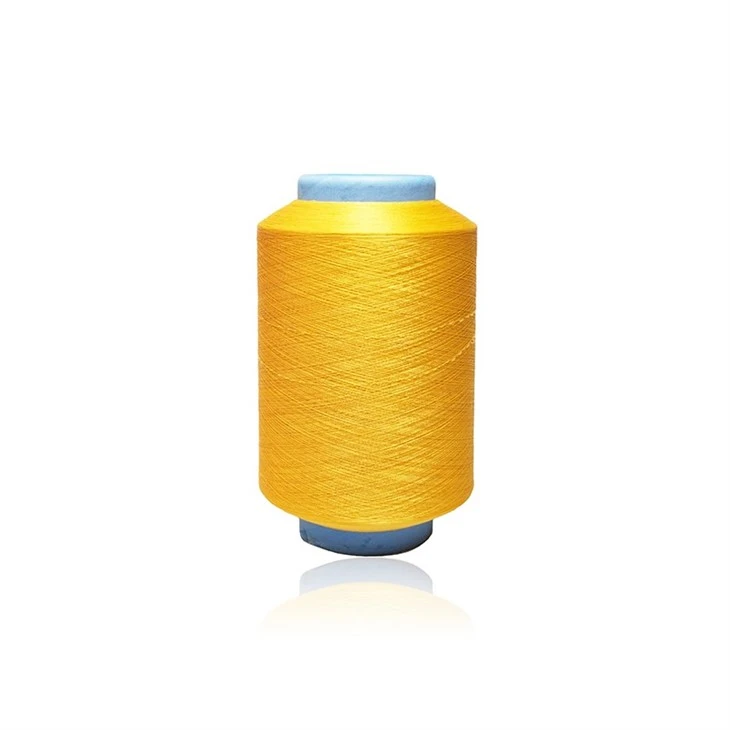
If you are in need of nylon covered yarn for your heat-resistant applications, I encourage you to reach out to us for more information and to discuss your specific requirements. Our team of experts can provide you with detailed product specifications and help you choose the most suitable yarn for your needs. We are committed to providing high-quality nylon covered yarn that meets the highest standards of performance and reliability.
References
- "Polyamides (Nylons)" in the Kirk - Othmer Encyclopedia of Chemical Technology.
- Textile Fibers: Structure, Properties, and Applications by A. R. Horrocks and W. A. H. Walters.
- Industrial Textiles: Structure, Properties, and Applications by K. S. V. S. N. Raju.


