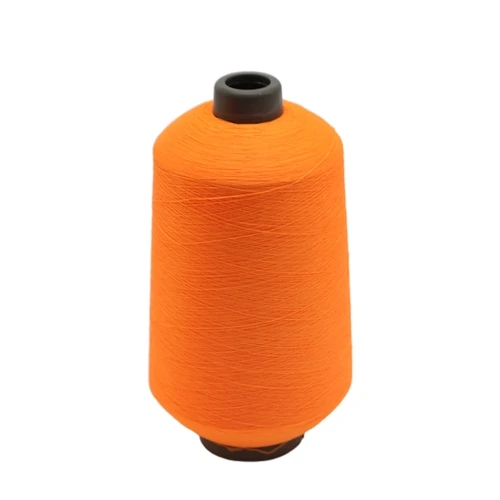

Start with the Final Textile Application
For textile buyers, choosing Covered Yarn should begin with the intended application rather than the yarn price or a single technical specification. Different textile products place different demands on elasticity, recovery, softness, abrasion resistance, and dimensional stability.
A yarn used for socks may need a soft hand feel and repeated stretch recovery, while yarn for compression garments requires stronger elastic support. Sportswear may prioritize lightweight stretch and fatigue resistance, whereas shoe upper fabrics require a balance between flexibility, durability, and shape retention.
Before contacting a Covered Yarn Manufacturer, buyers should clearly define the finished product and evaluate:
- Fabric construction
- Required stretch
- Elastic recovery
- Yarn thickness
- Hand feel
- Abrasion resistance
- Knitting method
- Expected service conditions
This application-based approach helps buyers avoid selecting specifications that perform well in isolation but do not match the actual textile production process.
Choose the Appropriate Covered Yarn Structure
The structure of Covered Yarn is another important purchasing factor. Single Covered Yarn (SCY), Double Covered Yarn (DCY), and Air Covered Yarn (ACY) have different structures and therefore provide different combinations of elasticity, stability, and fabric characteristics.
SCY uses one covering filament around the elastic core. It provides a balance between stretch, softness, and production efficiency and is commonly used in hosiery, seamless garments, and knitted fabrics.
DCY uses two covering layers around the elastic core. The additional covering provides greater structural stability and protection, making it suitable for products requiring stronger recovery and support.
ACY uses air interlacing to combine the elastic core and filament yarn. Its lightweight structure and soft touch make it suitable for selected stretch fabrics, activewear, and other applications where comfort is important.
Buyers should compare yarn structures according to the required fabric performance instead of assuming that a more complex structure is automatically better.
Check Spandex Denier and Yarn Count
The combination of spandex denier and covering filament denier directly affects the thickness, stretch, support, and hand feel of Covered Yarn.
A finer yarn count can contribute to a lighter and softer fabric structure, while a higher yarn count can provide greater support and durability. However, the appropriate specification depends on the fabric construction and end use.
For example, hosiery manufacturers may require a relatively fine yarn for comfortable lightweight fabrics. Compression textile manufacturers may need a specification that provides stronger elastic force and recovery.
Before placing a bulk order, buyers should confirm:
- Spandex denier
- Nylon or polyester denier
- Total yarn size
- Elongation
- Elastic recovery
- Yarn diameter
- Twist or covering parameters
Sample testing is recommended because the same yarn specification may perform differently under different knitting conditions.
Compare Nylon and Polyester Covering Materials
The covering filament protects the elastic core while influencing the surface, durability, and processing characteristics of the yarn.
Nylon Covered Yarn
Nylon is commonly selected when buyers require a combination of softness, flexibility, and abrasion resistance.
Its characteristics include:
- Soft hand feel
- Good abrasion resistance
- Flexible structure
- Smooth knitting performance
- Good fatigue resistance
Nylon Covered Yarn is commonly used in hosiery, seamless garments, sportswear, and shoe upper fabrics.
Polyester Covered Yarn
Polyester provides good dimensional stability, strength, and resistance to deformation. It can be considered for applications where fabric structure, durability, and cost control are important.
The decision between nylon and polyester should therefore be based on the finished textile requirements rather than material preference alone.
Evaluate Elastic Recovery Instead of Stretch Alone
One common mistake among textile buyers is focusing only on how much a yarn can stretch. For many applications, elastic recovery is equally important.
Covered Yarn needs to extend during use and return toward its original condition after the external force is removed. If recovery performance is insufficient, the finished fabric may gradually lose its original shape after repeated stretching.
Buyers should consider:
- Initial elongation
- Recovery rate
- Repeated stretching performance
- Permanent deformation
- Tensile strength
- Fatigue resistance
For hosiery, sportswear, and compression garments, stable recovery can directly influence garment fit and long-term fabric performance.
Consider Knitting Machine Compatibility
A Covered Yarn can meet the required technical specifications but still create production problems if it does not match the buyer's knitting equipment.
Textile buyers should communicate relevant production information to the supplier, including:
- Knitting machine type
- Machine speed
- Fabric structure
- Stitch density
- Yarn feeding method
- Required fabric thickness
- Target stretch level
Stable yarn tension is particularly important during high-speed knitting. Excessive variation can cause yarn breakage, uneven fabric density, or inconsistent elasticity.
An experienced Covered Yarn Supplier should be able to discuss these production factors with buyers and recommend specifications based on actual manufacturing conditions.
Check Quality Consistency for Bulk Orders
For B2B textile purchasing, consistency between batches can be more important than the performance of a single sample. A sample may meet the buyer's requirements, but variations during mass production can affect fabric quality and production efficiency.
Before placing a large order, buyers should evaluate whether the supplier has controls for:
| Quality Factor | What Buyers Should Check |
|---|---|
| Yarn Count | Consistent denier and yarn diameter |
| Yarn Tension | Stable covering tension during production |
| Elongation | Consistent stretch between batches |
| Recovery | Stable recovery after stretching |
| Appearance | Uniform covering and package formation |
| Strength | Consistent tensile performance |
| Batch Consistency | Similar performance across production lots |
For overseas buyers, consistent quality also reduces the risk of production adjustments after the yarn has arrived at the factory.
Ask About OEM and Customization Capabilities
Textile manufacturers often require yarn specifications that are not available as standard products. Depending on the application, buyers may need customized denier combinations, covering materials, yarn structures, packaging, or other production parameters.
When evaluating an OEM Covered Yarn Manufacturer, buyers can ask about:
- Available yarn structures
- Spandex specifications
- Nylon and polyester options
- Customized yarn counts
- Sample development
- Packaging requirements
- Minimum order quantities
- Production lead times
- Quality inspection procedures
Clear communication during the sample stage can help both parties confirm technical requirements before moving into bulk production.
Consider Supply Capacity and Production Stability
For B2B buyers, product performance is only one part of supplier evaluation. A supplier also needs to support continuous production when the customer moves from samples to recurring bulk orders.
Important factors include:
- Production capacity
- Manufacturing equipment
- Quality control system
- Delivery capability
- OEM support
- Communication efficiency
- Batch consistency
A supplier with stable manufacturing processes can make it easier for textile factories to maintain consistent production schedules and avoid unexpected changes in yarn performance.
Work with a Professional Covered Yarn Manufacturer
Choosing the right Covered Yarn requires buyers to evaluate the complete relationship between yarn structure, material, yarn count, elasticity, recovery, knitting conditions, quality consistency, and final application. Instead of selecting a product based on one parameter, textile buyers should assess whether the yarn can meet both technical and production requirements over repeated bulk orders.
Kangjiesi focuses on the manufacturing and supply of Covered Yarn, Single Covered Yarn, Double Covered Yarn, Air Covered Yarn, Rubber Yarn, Nylon Yarn, and Spun Yarn for textile manufacturers, fabric mills, wholesalers, and apparel brands. Its product range supports applications including hosiery, seamless garments, sportswear, shoe uppers, elastic fabrics, and other textile products requiring controlled stretch and recovery.
With professional elastic yarn manufacturing experience, quality inspection procedures, flexible OEM customization, and production capabilities covering different yarn structures and material combinations, Kangjiesi works with B2B textile buyers to develop yarn specifications according to their fabric and production requirements. This allows buyers to evaluate not only the yarn itself, but also its compatibility with their manufacturing process and long-term supply needs.