



| Quick Details | |||
| Specification: | DTY | Material: | Polyester/nylon/covered yarn |
| Style: | Single or covered | Technics: | PLASMA |
| Application: | warm clothes | Evenness: | as request |
| Twist: | all can | Feature: | high quality |
| Strength: | great | Place of Origin: | Zhejiang, China |
| Brand Name: | zhejiangkangjiesi | Single/Double: | Single or none |
| Use: | gloves,underwear,socks,pantyhose and so on | Raw material: | dty or covered yarn |
| MOQ: | 1kg,if colors,5kgs | Colour: | all can |
| Nature: | Eco-Friendly | Packing: | PP bags with Carton Package |
| Certification: | JIS | Grade: | Grade AA |
| Technical Point: | Low temperature plasma | Port: | Ningbo/Shanghai OR YIWU |
Supply Ability &Packaging &Delivery
Supply Ability
Supply Ability 40000 Kilogram/Kilograms per Month
Packaging & Delivery
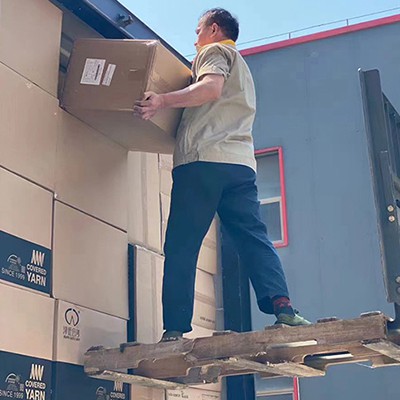
Packaging Details 66cm*33.5cm*42.5cm
Lead Time:
|
Quantity(Kilograms) |
1 - 5000 |
>5000 |
|
Est. Time(days) |
14 |
To be negotiated |


 |
 |
 |
 |
 |
 |
 |
 |

FAQ
Development History and Usage of Military Textiles
Development History:
The evolution of military textiles is a testament to the intertwining of technological advancements and military necessities. The history can be traced back to the mid-19th century, when the demand for military supplies spurred the development of textile industries worldwide.
19th Century:
China: In the aftermath of the Opium War, China recognized the need for modernization, leading to the establishment of official military industries, including textile factories. For instance, the Lanzhou Woolen Mill, founded by Zuo Zongtang in 1880, was the first fully mechanized textile factory in China, producing materials for military use.
20th Century:
Textile Diversification: As the 20th century progressed, military textiles diversified, incorporating synthetic fibers and advanced materials to meet the demands of modern warfare.
World War II and Beyond: During and after World War II, military textiles underwent significant advancements, with the development of specialized fabrics for protection, insulation, and camouflage.
Post-War Period:
Cold War and Beyond: The Cold War era saw further advancements in military textiles, with the development of materials like Kevlar and Nomex, which provided exceptional ballistic and flame resistance.
Global Cooperation and Competition: Countries around the world invested heavily in research and development, leading to the creation of high-performance fabrics tailored to specific military needs.
Usage:
Military textiles are an essential component of modern military equipment and uniforms, serving a wide range of purposes. They can be categorized into several key areas:
Uniforms and Apparel:
Conventional Uniforms: These include standard-issue military uniforms, such as combat fatigues, dress uniforms, and cold-weather gear. They are designed for comfort, durability, and camouflage.
Specialized Apparel: Examples include flame-resistant clothing, chemical-protective suits, and ballistic vests. These garments provide soldiers with additional protection against hazards encountered in the field.
Equipment and Shelter:
Tents and Tarps: High-performance fabrics are used to construct lightweight, durable, and weather-resistant shelters for military personnel.
Backpacks and Packsacks: Synthetic fibers like nylon and polyester are commonly used in the construction of military backpacks and packsacks due to their strength, durability, and moisture-wicking properties.
Protection and Safety:
Ballistic Materials: Materials like Kevlar and Spectra are used in the production of body armor, providing soldiers with protection against small arms fire and shrapnel.
Flame-Resistant Fabrics: Nomex and other aramid fibers are used in the manufacture of flame-resistant clothing, ensuring that soldiers remain safe in fire-prone environments.
Camouflage and Concealment:
Patterned Fabrics: Military uniforms and equipment often feature specialized camouflage patterns designed to blend with specific environments, reducing the visibility of soldiers to enemy forces.
Infrared-Reflective Materials: Advanced fabrics can also be designed to reflect or absorb infrared radiation, making soldiers harder to detect using night-vision equipment.
Conclusion:
The development of military textiles has been driven by the evolving needs of modern warfare. From the earliest days of mechanized production to the present day, technological advancements have enabled the creation of high-performance fabrics that provide soldiers with unparalleled levels of protection, comfort, and versatility. As military operations continue to evolve, so too will the materials and technologies used to support them.
Hot Tags: warm polyester dty knitting yarn, China, suppliers, manufacturers, factory, wholesale, cheap, Heating Thermal Underwear Yarn, Thermal Underwear Yarn, Hygroscopic Heating Socks Yarn, Hygroscopic Socks Yarn, Heating Socks Yarn, Heating Underwear Yarn


