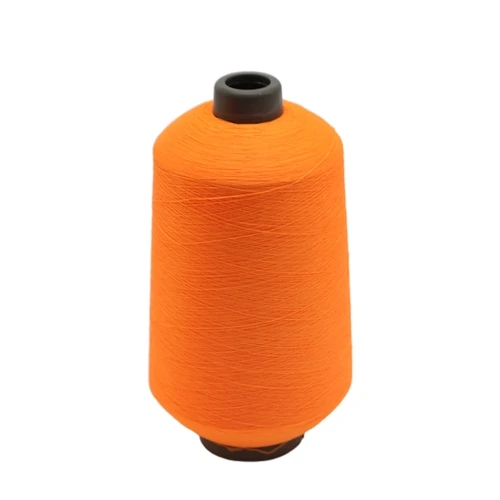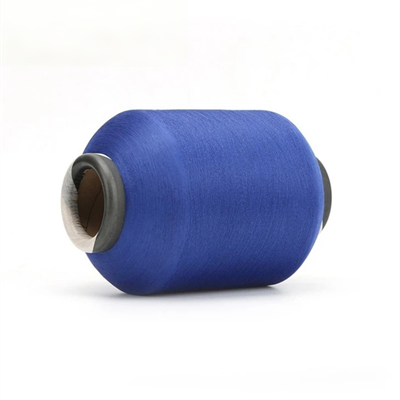

Understand Different Types of Covered Yarn
Choosing the right Covered Yarn begins with understanding the differences between the available yarn constructions. Each type is designed to provide specific levels of elasticity, durability, fabric appearance, and production efficiency. Selecting an unsuitable yarn structure may result in inconsistent fabric quality, lower machine efficiency, or increased manufacturing costs.
Single Covered Yarn (SCY)
Single Covered Yarn is produced by wrapping one layer of nylon or polyester filament around a spandex core. It offers a balanced combination of elasticity, softness, and production efficiency, making it one of the most widely used elastic yarns in the textile industry.
It is commonly used for:
- Hosiery
- Sportswear
- Seamless underwear
- Knitted fabrics
- Shoe uppers
Compared with other covered yarn types, SCY provides lower production costs while maintaining stable elastic performance for most general textile applications.
Double Covered Yarn (DCY)
Double Covered Yarn is manufactured by covering the spandex core with two layers of filament yarn in opposite directions. This structure creates a more balanced yarn with improved strength and elastic recovery.
DCY is often selected for products requiring higher durability, including:
- Compression stockings
- Medical textiles
- Premium hosiery
- High-end seamless garments
- Elastic support products
Its superior stability helps reduce deformation after repeated stretching and washing.
Air Covered Yarn (ACY)
Air Covered Yarn is produced using compressed air to interlace spandex with filament yarn instead of mechanical wrapping. This creates a lighter and softer yarn structure while maintaining excellent elasticity.
Typical applications include:
- Activewear
- Yoga wear
- Leggings
- Stretch fabrics
- Performance apparel
For manufacturers pursuing lightweight fabrics with excellent comfort, ACY is often an efficient production solution.
Choose Covered Yarn Based on Your Textile Products
Every textile product has unique performance requirements. Rather than selecting yarn based solely on price or specification, manufacturers should evaluate how the finished fabric will perform during daily use.
Hosiery Manufacturing
Socks require yarns that maintain elasticity after thousands of stretching cycles while providing excellent abrasion resistance.
Suitable covered yarn should offer:
- Stable elastic recovery
- Uniform knitting performance
- Smooth fabric appearance
- Low yarn breakage rate
- Comfortable hand feel
Nylon Covered Yarn is commonly preferred because of its excellent wear resistance.
Sportswear & Activewear
Sports garments demand continuous flexibility while maintaining garment shape.
Important characteristics include:
- High stretch performance
- Excellent recovery
- Lightweight construction
- Stable knitting efficiency
- Good compatibility with moisture-management fabrics
Selecting the proper covered yarn helps improve garment durability without sacrificing comfort.
Seamless Garments
Seamless knitting requires highly consistent yarn feeding throughout production.
Manufacturers usually prioritize:
- Uniform yarn diameter
- Stable tension
- Low hairiness
- Excellent surface smoothness
- Reliable elastic performance
Stable covered yarn significantly reduces machine downtime and fabric defects.
Shoe Upper Fabrics
Modern knitted footwear requires yarn that combines flexibility with structural stability.
Manufacturers generally focus on:
- Shape retention
- Lightweight construction
- Uniform fabric density
- Excellent knitting compatibility
- Long-term durability
Covered Yarn allows shoe upper fabrics to maintain flexibility while supporting automated knitting production.
Compare Nylon Covered Yarn and Polyester Covered Yarn
One of the most common purchasing questions is whether Nylon Covered Yarn or Polyester Covered Yarn is the better option.
The answer depends entirely on the final textile application.
Nylon Covered Yarn
Advantages include:
- Excellent abrasion resistance
- Soft fabric touch
- Superior flexibility
- Better fatigue resistance
- Stable elastic recovery
Recommended for:
- Hosiery
- Sportswear
- Compression garments
- Seamless apparel
- Shoe uppers
Polyester Covered Yarn
Advantages include:
- Better dimensional stability
- High color fastness
- Competitive manufacturing cost
- Good wrinkle resistance
- Stable fabric structure
Recommended for:
- Elastic bands
- Knitted fabrics
- Industrial textiles
- General apparel
- Functional fabrics
Selecting the appropriate covering material helps balance production costs with finished product performance.
Select the Appropriate Yarn Specification
Yarn specification directly affects fabric quality, knitting efficiency, and production consistency.
Before purchasing Covered Yarn, buyers should evaluate:
- Spandex denier
- Nylon denier
- Polyester denier
- Filament count
- Twist direction
- Twist level
- Elastic elongation
- Yarn evenness
For example, lower denier yarns are generally suitable for lightweight garments, while higher denier specifications provide stronger support for thicker elastic fabrics.
Choosing inappropriate specifications may result in:
- Fabric streaks
- Uneven elasticity
- Increased yarn waste
- Knitting defects
- Lower production efficiency
Professional Covered Yarn manufacturers usually recommend suitable specifications according to customer fabric samples or machine requirements.
Evaluate Elastic Recovery and Fabric Performance
Elasticity is one of the most important indicators when purchasing Covered Yarn.
However, high stretch alone does not guarantee excellent fabric performance. Buyers should pay equal attention to elastic recovery, which determines whether garments can return to their original shape after repeated stretching.
Reliable Covered Yarn should provide:
- Stable elongation
- Fast recovery
- Long fatigue life
- Uniform elastic distribution
- Reduced permanent deformation
These characteristics are particularly important for products such as sportswear, socks, seamless garments, elastic waistbands, and compression textiles that undergo frequent stretching during use.
Consider Knitting Machine Compatibility
Covered Yarn should perform consistently across different textile production equipment.
Before placing bulk orders, manufacturers should verify compatibility with:
Circular knitting machines
Hosiery knitting machines
Flat knitting machines
Warp knitting machines
Seamless knitting machines
Machine speed, yarn tension, feeding stability, and needle configuration all influence production efficiency.
Well-manufactured Covered Yarn minimizes broken ends, reduces machine stoppages, and helps factories achieve higher productivity.
Focus on Production Consistency for Bulk Manufacturing
For textile factories producing thousands of meters of fabric every day, consistency is more valuable than simply obtaining the lowest purchasing price.
High-quality Covered Yarn should maintain stable quality throughout every production batch.
Important quality indicators include:
Uniform yarn diameter
Stable elasticity
Consistent tension
Low hairiness
Excellent package formation
Reliable dyeing performance
Consistent production quality helps reduce fabric defects while improving customer satisfaction and lowering manufacturing costs.
Look for OEM and Customization Capabilities
Many textile manufacturers require customized yarn rather than standard market specifications.
An experienced Covered Yarn Manufacturer should provide flexible OEM services such as:
Custom yarn specifications
Nylon or polyester options
Customized denier combinations
Color matching
Package customization
Sample development
Bulk manufacturing support
These capabilities allow garment manufacturers, fabric mills, and textile brands to develop products that meet their own technical and commercial requirements.
Quality Factors to Check Before Bulk Purchasing Covered Yarn
Before confirming a long-term supplier, buyers should evaluate several key quality factors beyond product pricing.
A professional supplier should demonstrate:
Strict raw material inspection
Stable production process
Consistent batch quality
Complete quality testing
Reliable delivery schedule
Export experience for international markets
Requesting production samples before mass purchasing is also recommended to verify knitting performance and fabric quality under actual production conditions.
Why Covered Yarn Supplier Selection Matters
Choosing the right Covered Yarn Supplier affects far more than product quality. It influences production efficiency, supply chain stability, product consistency, and long-term manufacturing costs. An experienced manufacturer can provide stable production capacity, technical support, strict quality control, and flexible OEM services that help customers reduce production risks while improving fabric performance.
As a professional Covered Yarn Manufacturer, Kangjiesi has accumulated extensive experience in supplying high-quality Single Covered Yarn, Double Covered Yarn, Air Covered Yarn, Nylon Yarn, Rubber Yarn, and Spun Yarn for customers worldwide. With advanced production equipment, consistent quality management, flexible customization capabilities, and efficient delivery, Kangjiesi supports textile manufacturers, fabric mills, wholesalers, and apparel brands in developing reliable elastic textile solutions for hosiery, seamless garments, sportswear, shoe uppers, and other performance fabric applications. Whether customers require standard specifications or customized yarn solutions, Kangjiesi is committed to delivering stable products and responsive manufacturing support that help businesses remain competitive in today's global textile market.