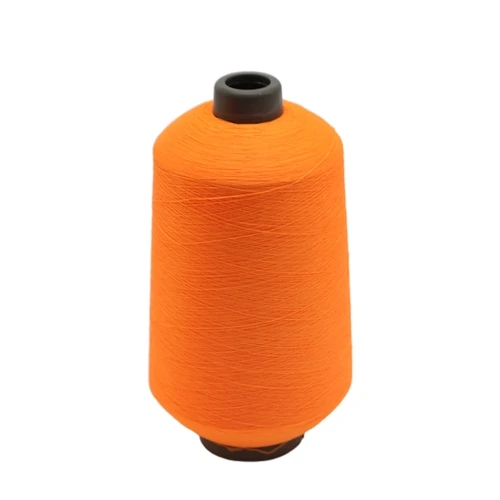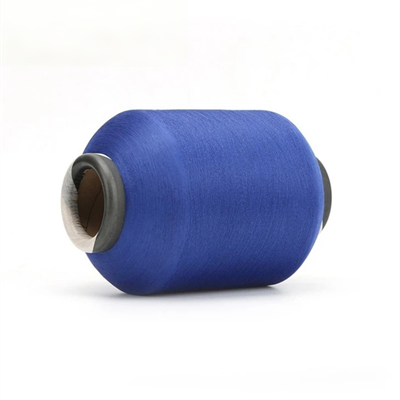
According to yarn raw materials
1. Pure spinning pure spinning is a yarn spun from a fiber material, such as cotton yarn, hemp yarn and silk yarn. This kind of yarn is suitable for making pure textiles.
2. Blended yarn blended yarn is a yarn spun from two or more fibers, such as polyester and cotton blended yarn, wool and viscose blended yarn, etc. This kind of yarn is used for fabrics that highlight the advantages of two fibers.
According to yarn thickness
1. Coarse and special yarn: coarse and special yarn refers to yarn of 32t and above (imperial system, 18bts and below). This kind of yarn is suitable for thick fabrics, such as tweed, coarse plain cloth, etc.
2. Medium and special yarn: medium and special yarn refers to the yarn of 21 ~ 32 tex (19 ~ 28 British count). This kind of yarn is suitable for medium and thick fabrics, such as medium plain cloth, gabardine, khaki, etc.
3. Fine and special yarn: fine and special yarn refers to the yarn of 11 ~ 20 tons (29 ~ 54 British threads). This kind of yarn is suitable for thin fabrics, such as fine cloth, poplin, etc.
4. Extra fine yarn: extra fine yarn refers to the yarn of 10t and below (British system 58 and above). This kind of yarn is suitable for high-grade fine fabrics, such as high count shirts, worsted close fitting sweaters, etc.
By spinning system
1. Worsted yarn worsted yarn, also known as combed yarn, refers to the yarn spun through the combing process, including combed cotton yarn and combed wool yarn. The fiber in the yarn has high parallel straightness, uniform evenness and smoothness, but the cost is high and the yarn count is high. Combed yarn is mainly used as raw materials for high-grade fabrics and knitwear, such as spinning, tweed, tweed, sweater, etc.
2. Roving yarn roving, also known as combed wool yarn or combed cotton yarn, refers to the yarn that is combed according to the general spinning system and spun without combing process. Roving yarn contains more short fibers, poor fiber parallel straightness, loose structure, more hairy antler, low count and poor quality. This kind of yarn is mostly used as raw materials for general fabrics and knitwear, such as woolen fabrics, medium and super cotton fabrics, etc.
3. Waste spinning waste spinning refers to the yarn spun from textile leftovers (waste cotton) or mixed with low-grade raw materials. The yarn is of poor quality, soft, uneven evenness, much impurity and poor color. Generally, it is only used to weave low-grade fabrics such as coarse cotton blanket, thick pile cloth and packaging cloth.
By spinning method
1. Ring spun yarn ring spun yarn refers to the yarn twisted by the traditional spinning method on the ring spinning frame. The fiber in the yarn is wound inside and outside, the yarn structure is compact and the strength is high, but the production efficiency is limited because it depends on a set of mechanism to complete twisting and winding at the same time. This kind of yarn has a wide range of uses and can be used in all kinds of fabrics, braids and ropes.
2. Free end yarn free end yarn refers to condensing and twisting fibers into yarn in the high-speed rotating rotor flow field or in the electrostatic field. The twisting and winding of yarn are completed by different parts respectively, so it has high efficiency and low cost.
(1) rotor spun yarn: rotor spun yarn, also known as rotor spun yarn, uses airflow to condense and twist fibers in a spinning cup with high-speed rotation into yarn. Compared with ring spinning yarn, the yarn structure is fluffy, wear-resistant, uniform evenness, bright dyeing, but low strength. This kind of yarn is mainly used for bulky and thick plain cloth, flannelette with good hand feel and knitted products in woven fabrics.
⑵ electrostatic yarn: electrostatic yarn is a yarn made by condensing and twisting fibers by using electrostatic field. The yarn structure is the same as that of roving, and its purpose is also similar to that of roving.
(3) vortex yarn: vortex yarn is the yarn spun by using fixed vortex spinning tube instead of high-speed spinning cup. The yarn has many bending fibers, low strength and poor evenness, but it has good dyeing and wear resistance. This kind of yarn is mostly used for pile fabrics, such as woolen clothes, sportswear, etc.
(4) dust cage yarn: dust cage yarn, also known as friction spinning, is a yarn made by condensing and twisting fibers with a pair of dust cages. The yarn has a layered structure, with large twist in the yarn core and hard hand feel, small twist in the outer layer and soft hand feel. This kind of yarn is mainly used in industrial textiles and decorative fabrics, and can also be used in outerwear (such as work clothes and protective clothes).
3. Non free end yarn: non free end yarn is another new spinning method different from free end yarn, that is, in the process of twisting the fiber, both ends of the fiber strip are held, not the free end. This new type of yarn includes self twist yarn, air-jet yarn and core spun yarn.
(1) self twisting yarn: self twisting yarn is a new type of yarn with non free end. It applies false twist to two yarn strips through reciprocating roller. When the yarn strips are close in parallel, they twist each other into yarn by the force of untwisting and rotation. The twist of this kind of yarn is uneven, and there are untwisted sections on one yarn, so the yarn strength is low. It is suitable for producing wool yarn and chemical fiber yarn, and is more suitable for fancy fabrics and suede fabrics.
(2) air jet yarn air jet yarn is a kind of yarn which is spun by using the high-speed jet vortex generated by compressed air to apply false twist to the yarn and wrap and kink. The yarn structure is unique, the yarn core is almost untwisted, and the outer fiber is wrapped randomly. The yarn is loose, rough and low strength. This kind of yarn can be processed into woven fabrics and knitted fabrics to make men's and women's jackets, shirts, sportswear and work clothes.
(3) core spun yarn: core spun yarn is a kind of yarn with filament as the core and wrapped with short fiber. It has the advantages of core filament and wrapped with short fiber, so that the yarn performance exceeds that of a single fiber. The commonly used yarn core filaments include polyester filament, nylon filament and spandex filament, and the outsourcing staple fibers include cotton, polyester / cotton, acrylic fiber, wool, etc. At present, core spun yarn is mainly used as sewing thread, shirt fabric, rotten fabric and elastic fabric.
According to yarn structure
1. Single yarn: single yarn refers to the yarn with only one fiber bundle twisted. A pure spinning yarn can be spun from one raw material to form a pure textile, or a blended yarn can be formed from two or more raw materials to form a blended fabric.
2. Strand: strand is a thread formed by twisting two or more single yarns. Its strength and wear resistance are better than single yarn. At the same time, the strand can also be combined and twisted in a certain way to obtain compound twisted strand, such as double strand, three strand and multi strand. It is mainly used for sewing thread, knitting thread or medium thick solid fabric.
3. Monofilament: monofilament is composed of a fiber filament. Its diameter depends on the thickness of the fiber filament. Generally, it is only used for processing fine and thin fabrics or knitted fabrics, such as nylon socks, veil towels, etc.
4. Textured yarn: textured yarn is obtained by deforming synthetic fiber filaments from straightening to crimping, also known as textured yarn or processed yarn. Textured yarn includes high elastic yarn, low elastic yarn, expanded yarn and network yarn.
(1) high elastic wire: high elastic wire or high elastic deformed wire has high elasticity and general bulkiness. It is mainly used for elastic fabrics, mainly nylon high elastic silk.
(2) low elastic yarn: low elastic yarn or deformed elastic yarn has moderate elasticity and bulkiness. It is mainly used for knitted fabrics, mainly polyester low elastic yarn.
(3) expanded yarn: expanded yarn has low elasticity and high bulkiness. It is mainly used for fabrics with good bulkiness, such as wool, underwear or coat. Its typical representative is acrylic expanded yarn, also known as cashmere.
(4) network wire network wire, also known as cross winding wire, is formed by holding some wires together before forming in the process of chemical fiber spinning. This silk feels soft, bulky and has good wool like effect. It is mostly used for women's tweed. Golf, which is popular in recent years, is also made of this silk.
6. Fancy yarn: fancy yarn refers to the yarn that obtains special appearance, feel, structure and texture through various processing methods. There are three main categories:
(1) fancy yarn: fancy yarn refers to the yarn in which the color fibers are mixed into the fibers of the base yarn according to a certain proportion, so that the yarn presents bright color segments and color dots of different lengths and sizes, such as color dot line, rainbow line, etc. This kind of yarn is mostly used in women's and men's jackets.
(2) fancy yarn: fancy yarn is a yarn with various appearance characteristics obtained by using the overfeed principle, such as loop wire, slub wire, spiral wire, knot wire, etc. The fabric made of this kind of yarn feels fluffy, soft and warm, with unique appearance style and strong three-dimensional sense. It can be used not only for light summer fabrics, but also for heavy winter fabrics. It can be used as clothing fabrics and decorative materials.
(3) special fancy thread: special fancy thread mainly refers to gold and silver wire, chenille thread, etc. Gold and silver thread mainly refers to the gold and silver thread obtained by clamping aluminum sheet between polyester film sheets or steaming on polyester film. It can be used for both fabric and decorative sewing thread to make the surface of the fabric shiny and bright. Chenille yarn is a special fancy yarn, that is, the fiber is held on the composite core yarn, like a bottle brush. It feels soft and is widely used in flocking fabrics and ear decoration fabrics.
By yarn use
1. Woven yarn: woven yarn refers to the yarn used to process woven fabrics, which is divided into warp yarn and weft yarn. Warp yarn is used as the longitudinal yarn of fabric, which has the characteristics of large twist, high strength and good wear resistance; Weft yarn is used as the transverse yarn of fabric, which has the characteristics of small twist, low strength, but soft.
2. Knitting yarn: knitting yarn is the yarn used for knitted fabrics. The yarn requires high quality, low twist and moderate strength.
3. Other yarn: including sewing thread, embroidery thread, knitting thread, miscellaneous thread, etc. According to different uses, the requirements for these yarns are different.