

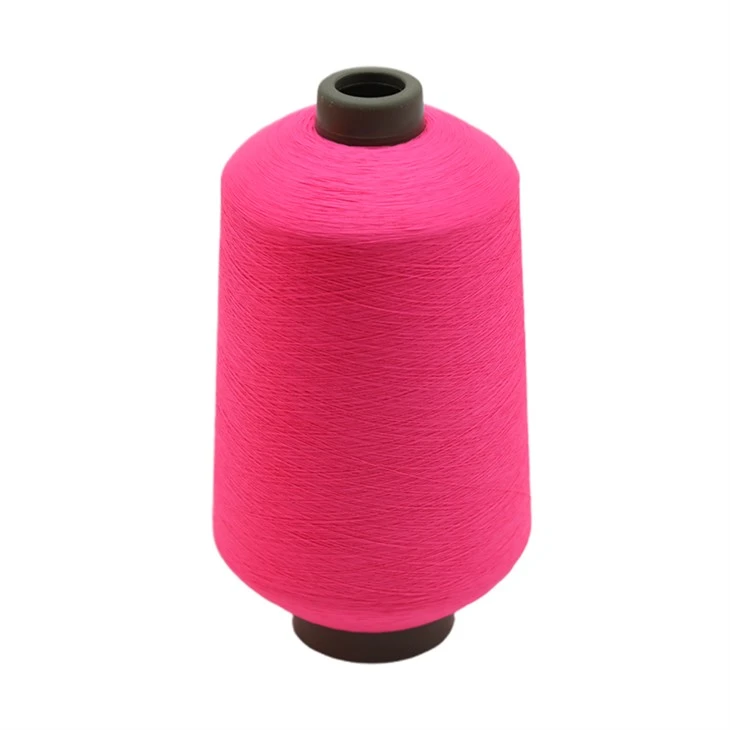
Nylon Yarn for Socks – Key Performance Characteristics
- Abrasion Resistance
Nylon filament provides resistance to repeated friction, making it suitable for sock areas exposed to frequent contact and mechanical wear, particularly the heel and toe.
- High Tensile Performance
The continuous filament structure provides good tensile strength relative to fine yarn sizes, helping the yarn withstand tension during knitting and repeated use.
- Flexible Filament Structure
Nylon filaments provide a balance of flexibility and strength, allowing the yarn to follow knitted loop structures without making the fabric excessively rigid.
- Smooth Yarn Surface
The continuous filament construction creates a relatively smooth surface, supporting stable yarn movement through guides and needles during sock knitting.
- Consistent Fabric Formation
Controlled denier and filament distribution help maintain consistent yarn feeding and loop formation, contributing to a more uniform knitted sock structure.
- Suitable for Fine-Gauge Knitting
Fine-denier nylon specifications can be used in lightweight and fine-gauge sock constructions where a finer yarn profile and controlled fabric coverage are required.
Nylon Yarn Placement in Sock Construction
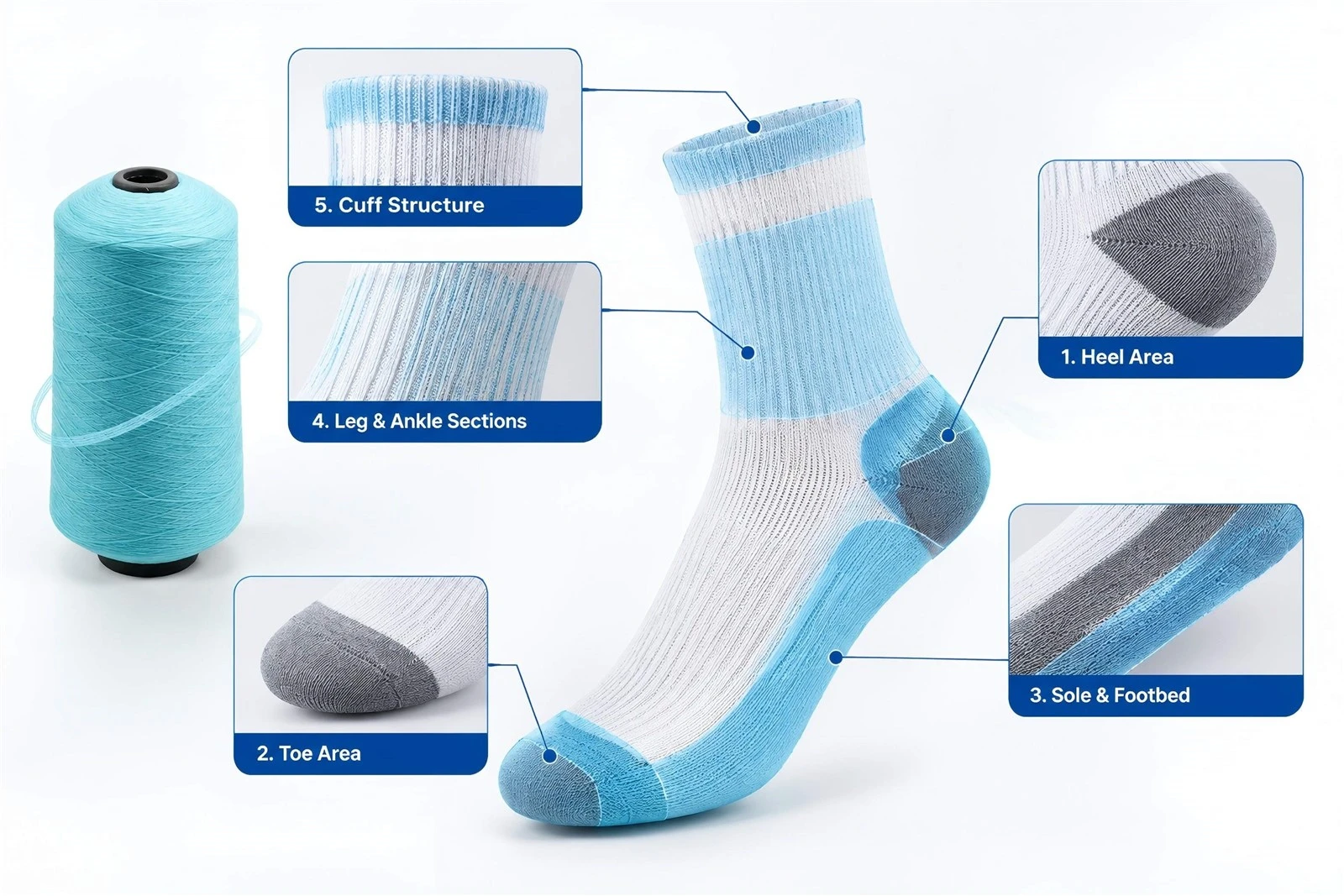
- Heel Area
Nylon yarn can be incorporated into the heel section where the fabric experiences repeated friction and mechanical loading during walking.
- Toe Area
It can be used around the toe section to support the knitted structure in an area exposed to frequent contact and movement inside footwear.
- Sole & Footbed
Nylon filament can be integrated into the sole or footbed area to provide a durable yarn component for repeated contact with shoes and the ground.
- Leg & Ankle Sections
Depending on the sock construction, nylon yarn can also be used in the leg and ankle sections to provide a smooth filament structure and consistent knitted appearance.
- Cuff Structure
Nylon yarn can be incorporated into cuff constructions together with elastic yarns or other functional yarns, where its role depends on the required fabric structure and stretch system.
Nylon Yarn Manufacturing Capability
Fine-Denier Nylon Yarn Production
KJS produces nylon filament yarn across fine-denier specifications, including multi-filament configurations suited to different sock gauges, fabric densities and surface requirements.
Specification-Based Yarn Processing
Production parameters such as denier, filament configuration, yarn construction and package winding are controlled according to the approved specification, supporting repeatable supply for sock manufacturers.
Bulk Supply & Batch Control
Finished yarn is processed and packed according to defined production requirements, with batch identification and finished-yarn inspection applied to support repeat orders and bulk sock production.
FAQ
How should nylon yarn be selected for different sock gauges?
Finer yarn specifications are generally considered for lightweight or fine-gauge constructions, while heavier specifications may be selected when greater fabric coverage is required. The final selection should be matched to the machine gauge and fabric design.
Can nylon filament yarn be used together with spandex?
Yes. Nylon and spandex are commonly combined in sock constructions where the nylon provides the filament component while the spandex provides controlled stretch and recovery.
Is it suitable for socks requiring a smooth fabric surface?
Continuous filament nylon can provide a smooth yarn surface, but the final fabric hand and appearance also depend on filament specification, knitting density and finishing conditions.
How does yarn selection affect the thickness of the finished sock?
Yarn denier, filament count, knitting density and stitch construction all contribute to the final fabric thickness. Yarn selection should therefore be evaluated together with the intended sock structure.
Hot Tags: nylon yarn for socks, China, suppliers, manufacturers, factory, wholesale, cheap


