
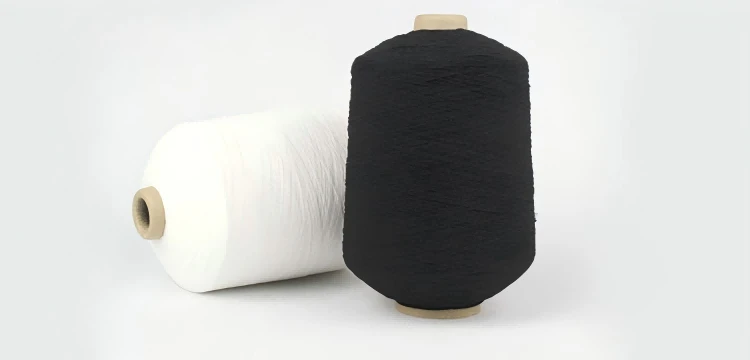
For textile manufacturers, nylon yarn selection can directly affect fabric weight, thickness, strength, stretch behavior, surface appearance, and production efficiency. Among the specifications used during yarn procurement, denier is one of the first values buyers usually check because it defines the linear density of the yarn.
A change in nylon yarn denier does more than change yarn weight. It can alter fabric coverage, yarn consumption, knitting or weaving conditions, hand feel, and the mechanical behavior of the finished textile. For bulk purchasing, understanding these relationships helps buyers avoid selecting a yarn that meets a nominal specification but produces a different fabric result during production.
What Does Nylon Yarn Denier Actually Mean?
Denier is a measurement of yarn linear density. It expresses the mass in grams of 9,000 meters of yarn. A lower denier represents a finer and lighter yarn, while a higher denier means greater mass per unit length.
The basic relationship can be understood as follows:
| Nylon Yarn Denier | Yarn Characteristic | Possible Fabric Effect |
|---|---|---|
| Lower Denier | Finer and lighter | Lighter structure, finer surface, lower yarn consumption |
| Medium Denier | Moderate linear density | Balanced coverage, weight, and processing behavior |
| Higher Denier | Greater mass per unit length | More coverage, greater fabric weight, more substantial structure |
For example, 40D nylon yarn and 100D nylon yarn contain different amounts of material over the same yarn length. If they are processed under otherwise similar conditions, the 100D yarn will generally provide greater coverage and contribute more material to the fabric structure.
However, denier does not describe all yarn properties. Buyers should also look at:
- Filament count: shows how the total denier is divided among individual filaments.
- Tensile strength: indicates the load the yarn can withstand before breaking.
- Elongation: describes how much the yarn extends under tension.
- Yarn construction: affects handling, surface characteristics, and processing behavior.
- Drawing and processing conditions: influence the physical performance of the finished yarn.
This means that denier should be used as one part of a complete yarn specification rather than as the only purchasing criterion.
How Can Denier Change Fabric Weight and Thickness?
When the knitting or weaving construction remains similar, a higher-denier yarn generally introduces more material into the fabric. This can increase fabric GSM, coverage, and thickness.
The effect is particularly noticeable when the same fabric construction is produced using different yarn sizes. A finer yarn can create a lighter textile structure, while a heavier yarn can provide greater coverage and a more substantial hand.
However, fabric weight is not determined by denier alone. Stitch length, knitting gauge, stitch density, weave construction, yarn consumption, and finishing conditions can all change the final GSM.
For example, increasing yarn denier without changing machine settings may produce a fabric that is heavier or denser than the original specification. In some cases, the machine settings need to be adjusted to maintain the original fabric weight and dimensions.
Therefore, buyers should evaluate denier together with the intended fabric construction rather than treating it as a direct substitute for GSM.
Why Does Denier Matter for Strength and Abrasion Resistance?
A higher-denier yarn contains more material per unit length, which can contribute to greater tensile load capacity. This is one reason heavier nylon yarns are considered for fabrics exposed to pulling, repeated movement, or mechanical contact.
However, a higher denier does not automatically mean that one yarn will outperform another in every mechanical test. Yarn strength is also affected by polymer characteristics, filament count, molecular orientation, drawing conditions, and yarn construction.
For procurement, buyers should compare several properties at the same time:
- Denier - defines the linear density of the yarn.
- Tensile strength - shows the yarn's resistance to breaking under load.
- Elongation - indicates how much the yarn can stretch before breaking.
- Abrasion performance - helps evaluate suitability for fabrics exposed to repeated friction.
This is particularly important for sportswear, hosiery, shoe uppers, elastic fabrics, and other products that experience repeated stretching or surface contact.
The final fabric structure also plays a major role in abrasion resistance. Yarn density, filament fineness, fabric construction, and finishing treatment can all influence how the surface behaves during repeated use.
What Difference Does Denier Make to Fabric Hand Feel and Surface Appearance?
Yarn fineness affects how individual filaments occupy the fabric structure. Lower-denier yarns can produce a lighter and finer surface, while higher-denier yarns can create greater coverage and a more substantial hand feel.
The difference becomes more noticeable when filament count is considered. Two nylon yarns may have the same total denier but different filament counts. Their individual filaments will then have different fineness, which can affect flexibility, smoothness, surface texture, and fabric appearance.
For example, a higher filament count at the same total denier means the total yarn mass is distributed among more individual filaments. This can produce a different surface effect from a yarn with fewer and coarser filaments.
Dyeing and finishing processes also affect the final appearance, so buyers should not judge yarn selection only from a specification sheet. A fabric sample produced under comparable processing conditions gives a much clearer indication of the actual result.
How Can Denier Influence Knitting and Weaving Performance?
Changing yarn denier changes the amount of material entering each knitted loop or woven intersection. As a result, it can affect yarn feeding, tension, loop formation, fabric coverage, and production efficiency.
On knitting machines, switching from a finer yarn to a heavier yarn may require adjustments to yarn tension, feeding conditions, stitch length, or other machine parameters. If these settings are not matched to the new yarn, problems such as uneven fabric density, excessive tension, or increased yarn breakage may occur.
Weaving also requires attention to yarn size. Denier influences warp and weft coverage, yarn spacing, fabric thickness, and sett. A heavier yarn can reduce open spaces within the fabric, while a finer yarn can create a lighter structure under comparable construction conditions.
For this reason, bulk buyers should conduct a machine trial before changing the yarn specification. The test should focus not only on whether the yarn can run through the machine, but also on the resulting fabric dimensions, GSM, appearance, tension behavior, and production efficiency.
Which Nylon Yarn Denier Fits Different Textile Applications?
There is no universal nylon yarn denier for every textile product. The correct specification depends on fabric construction, machine gauge, required GSM, strength, stretch behavior, surface appearance, and final application.
Fine-denier nylon yarns are often considered when the fabric requires a lighter structure and finer surface. They can be suitable for certain hosiery, lightweight garments, and fine knitted constructions.
Medium-denier yarns can provide a balance between fabric coverage and weight and may be selected for general apparel and elastic textile constructions.
Higher-denier yarns may be more suitable when the fabric needs greater coverage, structural support, or resistance to repeated mechanical contact.
| Application | Main Denier Considerations |
|---|---|
| Hosiery | Fineness, coverage, stretch, and surface feel |
| Seamless garments | Machine gauge, loop formation, fabric weight |
| Sportswear | Strength, elongation, fabric weight, movement |
| Shoe uppers | Coverage, abrasion resistance, structural support |
| Elastic fabrics | Yarn construction, elongation, recovery, machine compatibility |
| Industrial textiles | Strength, durability, fabric density, processing conditions |
The application alone should not determine the final denier. The supplier and buyer should confirm the specification through actual yarn and fabric trials.
How Does Kangjiesi Control Nylon Yarn Specifications?
Kangjiesi is a covered yarn manufacturer and industrial textile supplier based in Zhuji, Zhejiang, China. The company has more than 20 years of yarn production experience and supplies Covered Yarn, Nylon Yarn, Functional Yarn, Rubber Yarn, and Spun Yarn for different textile manufacturing applications.
For customized orders, Kangjiesi can work with buyers on specifications including denier, yarn composition, filament combinations, elasticity performance, color matching, cone size, labeling, and export packaging.
The production process places particular attention on yarn tension and elasticity stability because these factors can affect subsequent knitting and weaving performance. Quality inspection is also used to monitor specification consistency between production batches.
Kangjiesi's technical team has more than 30 years of experience in covered yarn and functional textile development. This experience allows the company to discuss yarn specifications from the perspective of actual textile processing rather than treating denier as an isolated number.
What Should Buyers Consider Before Placing a Bulk Order?
For bulk nylon yarn procurement, the main risk is not simply receiving the wrong denier. A yarn can meet the nominal denier requirement and still produce different fabric results because of changes in filament count, strength, elongation, construction, or processing conditions.
A practical purchasing process can be divided into four stages:
Define the specification
Confirm denier, filament count, yarn construction, strength, elongation, color, package, and intended application.
Run a sample trial
Use the target knitting or weaving conditions and record yarn running behavior and fabric results.
Approve a reference sample
Keep the approved yarn and fabric sample together with the final technical specification.
Control the bulk order
Use the approved specification as the production reference for subsequent batches.
This process gives both the buyer and manufacturer a clear basis for checking whether the delivered yarn matches the material used during the original production trial.
What Can Buyers Expect from Kangjiesi?
Zhejiang Kangjiesi New Material Technology Co., Ltd. is a China-based covered yarn manufacturer and industrial textile supplier serving applications such as hosiery, seamless garments, sportswear, shoe uppers, elastic fabrics, and functional textiles.
Its product range covers Covered Yarn, Nylon Yarn, Functional Yarn, Rubber Yarn, and Spun Yarn, with customized production available for different textile requirements.
Kangjiesi supports specifications covering denier, composition, filament combinations, elasticity, color, cone size, labeling, and export packaging. Its manufacturing and inspection processes focus on yarn tension, elasticity stability, specification control, and batch consistency.
For buyers selecting nylon yarn for bulk production, this approach provides a way to connect the yarn specification with the actual fabric structure, machine conditions, and end-use requirements. Denier remains an important starting point, but the final decision should be based on the complete yarn specification and verified production performance.


